


Hello everybody,
This week we’re looking at my perfectly groomed holiday.
You can find the companion article here: “Live deliberately”: The origin of America’s first philosophy
I’ve just come back from holiday.
It was the kind of holiday where you pay a month’s salary to get back in touch with nature. There’s a big swimming pool for the kids, adventure activities for the restless, and thousands of ancient redwoods for the tree-lovers.
“These trees can grow as old as 2,000 years,” the sign said, “but ours are 175 years old.”
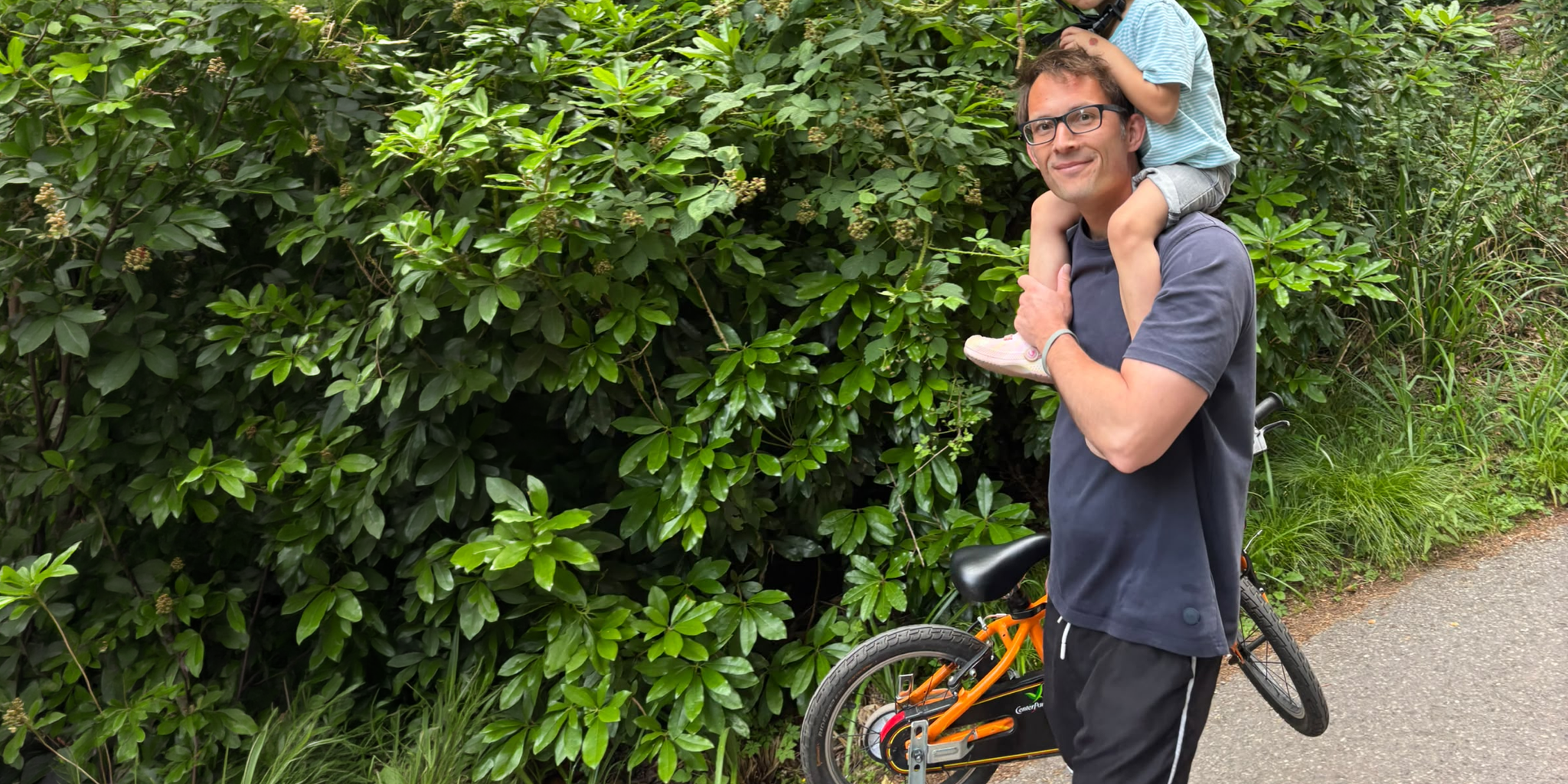
One morning, as the cabin slept, I went for a sunrise stroll along the Cascade Way — a long gravel trail that ran alongside a stream. It was early enough and shaded enough to be perfectly cool, and about halfway along, as I turned a corner to see an especially handsome waterfall, I had a moment. I was stopped by the beauty of the scene. I gave a contented sigh. I felt myself falling into a warm, blanketed bed of absolute serenity. As far as I am concerned, just that single moment was worth the month’s salary.
But then, as I tend to do, I took it too far.
“I want to move to the woods,” I excitedly told my wife as I got back. “I want to live among the trees. I’m done with this exhausting choke of civilization. Take me to The Wild.”
A blank stare.
“See, look at this house.” I waved my phone in her face. “It’s got a lake! It’s got woods!”
“It’s in the middle of nowhere, Jonny.”
“But nature, babes. Nature.”
I’ve done this before. When I was 18 years old, I went on my first ever horse ride. I was living in New Zealand at the time, and, as countries go, Middle-earth is a great first place to start horse riding. But for months and months afterward, I harbored unvoiced fantasies about living in a cabin off in the wild. Jonny the Homesteader, living a life of bucolic purity. No one to bother me and no worries to have when you’re out riding in the woods.
But my holiday was not really nature. My horse riding was not really wild. And so, this week we look at the multilayered aspects of the wild.
Go well,
Jonny
The natural sublime
In the mid-19th century, the American philosophers Ralph Waldo Emerson and Henry Thoreau led the transcendentalist movement. Transcendentalism was a kind of mystical philosophy that argued religious truths are more often intuited than rationalized. We can feel the divine in many ways because we all possess a filament of that divine. But one of the best ways to do this is to be around nature. Go out into the woods, and you will find forces you cannot find in traditional worship. God is not easily found in temples, mosques, and churches. God is in chalky cliffsides, white-rushing rivers, and the frost-peaked mountains of the wild. So, get your hiking boots on. Get outside. Find God.
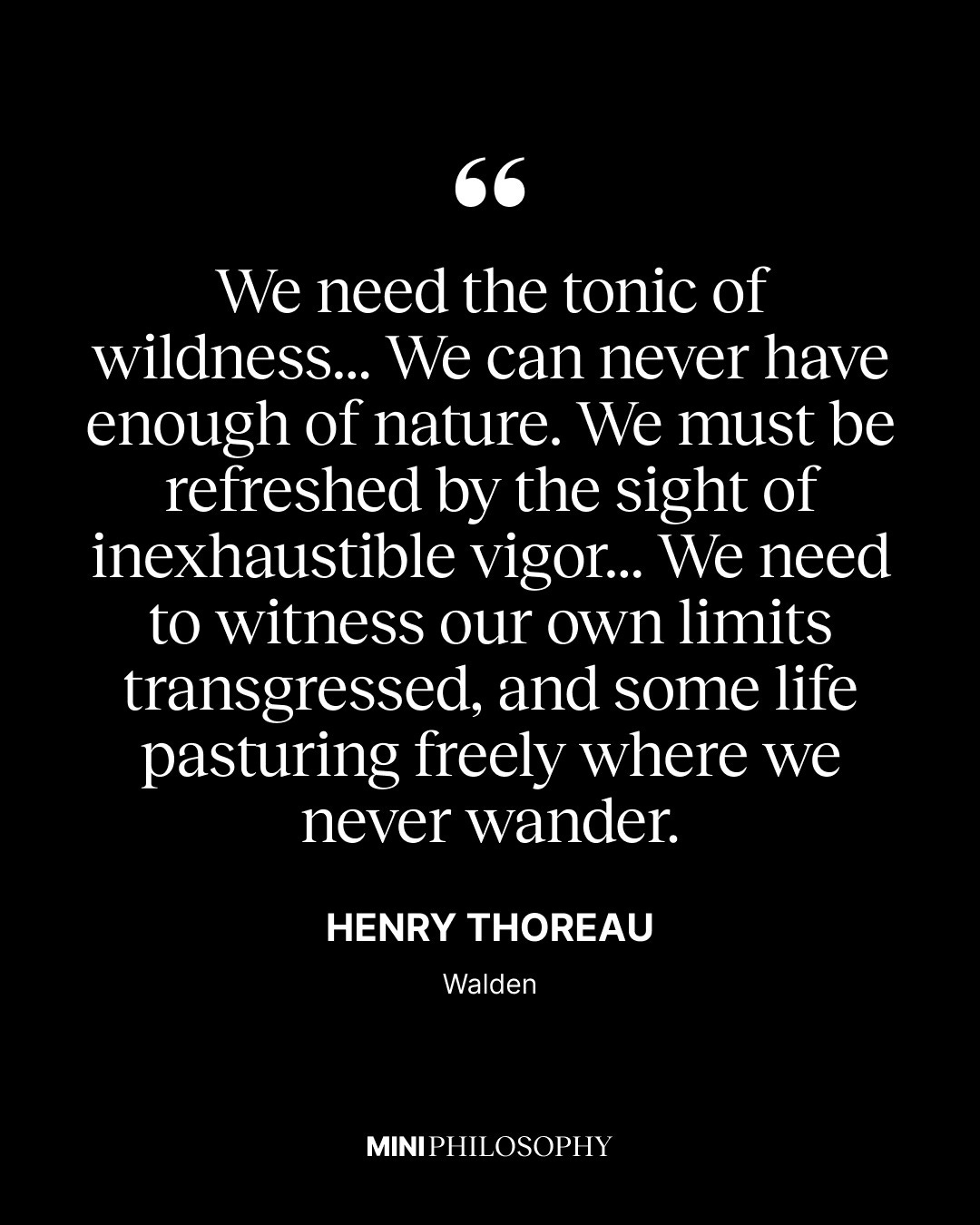
The problem is that when Emerson and Thoreau talked about “the wild,” they really only meant the closely manicured version most of us grew up with. Even in their own day, people pointed out that when the transcendentalists talked about “nature,” they really meant “park” or even “garden.” For example, when Thoreau wrote Walden, he lived a short walk away from his parents’ house. “We need the tonic of wildness,” he wrote, “…we require that all things be mysterious and unexplorable.” And then he’d pop home to have his mother wash his clothes.
This isn’t to say that Thoreau is wrong. Just as my semi-mystical experience along the Cascade Way was very real and important, Thoreau’s celebration of nature is absolutely spot on. Being around nature is good for us. Studies consistently show that even a tiny green pot plant can lighten your mood and that spending sustained time outdoors makes you happier. So yes, we do need “a tonic” of nature, but the point is that there is a difference between nature and the true wild.
The kind of nature most of us experience is different from the one our forebears knew. Unless you really go out of your way to live in an abandoned bus in Alaska, most of our nature is at least slightly maintained and mostly defanged. People dive into nature like a summer pool and hop right out when they’re done. Even if you like to sleep under a bivouac in the cold of February with an amber warning of passing bears, you sleep knowing that a good hospital is not far away. You know you’re a phone call away from help. Even during his three-week rainfalls, Thoreau knew he could get out and get warm if he wanted to.
To many living today — especially those of us living in towns and cities — nature is beautiful. It’s restorative and calming. We can get outside and sip our coffee to the pleasing chirping of birds. I’m sure this gentle, soft appreciation was true thousands of years ago, as well. An ancient Greek could just as much appreciate the Sun twinkling along the sea as I can. But to pre-modern people, nature wasn’t just beautiful. It was also sublime.
Edmund Burke was one of the first to make the distinction between the beautiful and the sublime, but then Kant took the idea and pushed it along with Prussian rigor. The beautiful is what we enjoy. It’s the buds of spring, the wash of an ocean, and the dog’s sleeping head in your lap. It’s pleasant. Most importantly, it’s safe. The sublime is what we dread or, perhaps, revere. It’s the heavy sheet of a winter blizzard, the crashing waves of a storm, and the distant howling of wolves. The sublime is both awesome and awful. It’s a great, terrible power that can utterly annihilate you. We are drawn to the sublime, and we even enjoy it a bit, but we enjoy it with a kind of morbid or masochistic frisson.
My woodland holiday was a beautiful nature retreat. It was a break from sirens and smoggy traffic. I saw more squirrels than I did pigeons for the first time in forever. But there were still roads and bikes zooming about. The Lakeside Shop sold microwave pizza, and the trees had signs.
I have never experienced the true sublimity of nature. I’ve never known the very real possibility that I could be maimed or killed by forces far bigger than me. I’ve never known the true fear that no one is out there to help me if worst comes to worst. I’ve never been battered or humbled by nature. In my leafy Oxfordshire bubble, humanity has hacked nature into a pretty and well-groomed country estate.
The myths and stories of old spoke about the wild in a way I no longer can. The religions and philosophies of a thousand years ago knew a nature with real depth — a nature that could awe you, humble you, swallow you whole. I have the beautiful, and they had the sublime. And I can’t, for the life of a newsletter, work out who’s better off.
What do you think?
IN A QUOTE

Jonny is the creator of the Mini Philosophy social network. He’s an internationally bestselling author of three books and the resident philosopher at Big Think. He's known all over the world for making philosophy accessible, relatable, and fun.
More Big Think content:
Big Think | Big Think Business | Starts With A Bang | Big Think Books
I remember feeling so emotionally betrayed when I first learned that Thoreau wrote Walden living within walking distance from his parents' home. However, although I have a more complex relationship to his writing now, I still agree with the fundamental ideas therein.
I live in rural Northern California, and often enjoy backpacking as a "hobby". I have come to really enjoy it, and I don't just enjoy it, I have experienced genuine spiritual activation as part of it. There's something about walking 30, 40, 50 miles away from one's car, with no cell service, into an area where the weather, terrain, and wildlife pose genuine threats to the unprepared or unlucky, with only the essentials that can be carried on one's own back, that really puts life and thoughts into a different perspective. I remember the first time I went backpacking alone instead of with a group. I woke up and saw the sun rise over an 11,000 foot mountain peak while I made instant coffee. Making coffee or seeing a sunrise doesn't bring me to tears when I'm at home, or even when I'm "glamping" with my car. But that day, it did. And it often still does bring me to tears when I see beautiful things while hiking. The further I am from "civilization", the more likely it is to happen.
I write this to say that I do think the sublimity of "nature" is still alive and well, and accessible to those who wish to experience it. I highly recommend it. It has been infinitely meaningful to me and my experience of the world. It has also enhanced my personal relationship with God more than the Catholicism I was raised with ever could.
All of that said, I do still greatly enjoy a walk along the streets of my town, enjoying the flowers and trees in everyone's manicured front lawns. If anything, experiencing rugged backcountry conditions has only made me a better appreciator of all natural beauty, at all levels.
My father grew up on a 5,000-acre ranch in Montana, in a dirt-floor cabin, an hour from town by horseback, in the 1930s and 40s. Six people under one roof with no illusions. His family didn't need to go looking for "the tonic of wildness" they lived with a very tough version of nature. Self-sufficiency wasn't a philosophy for them, it was a necessity for survival, and as people like to say today from behind the comfort of their keyboards, they literally knew nobody was coming to save them. Most of us are now paying good money to simulate a fraction of what used to just be an average day.