


Hello everybody,
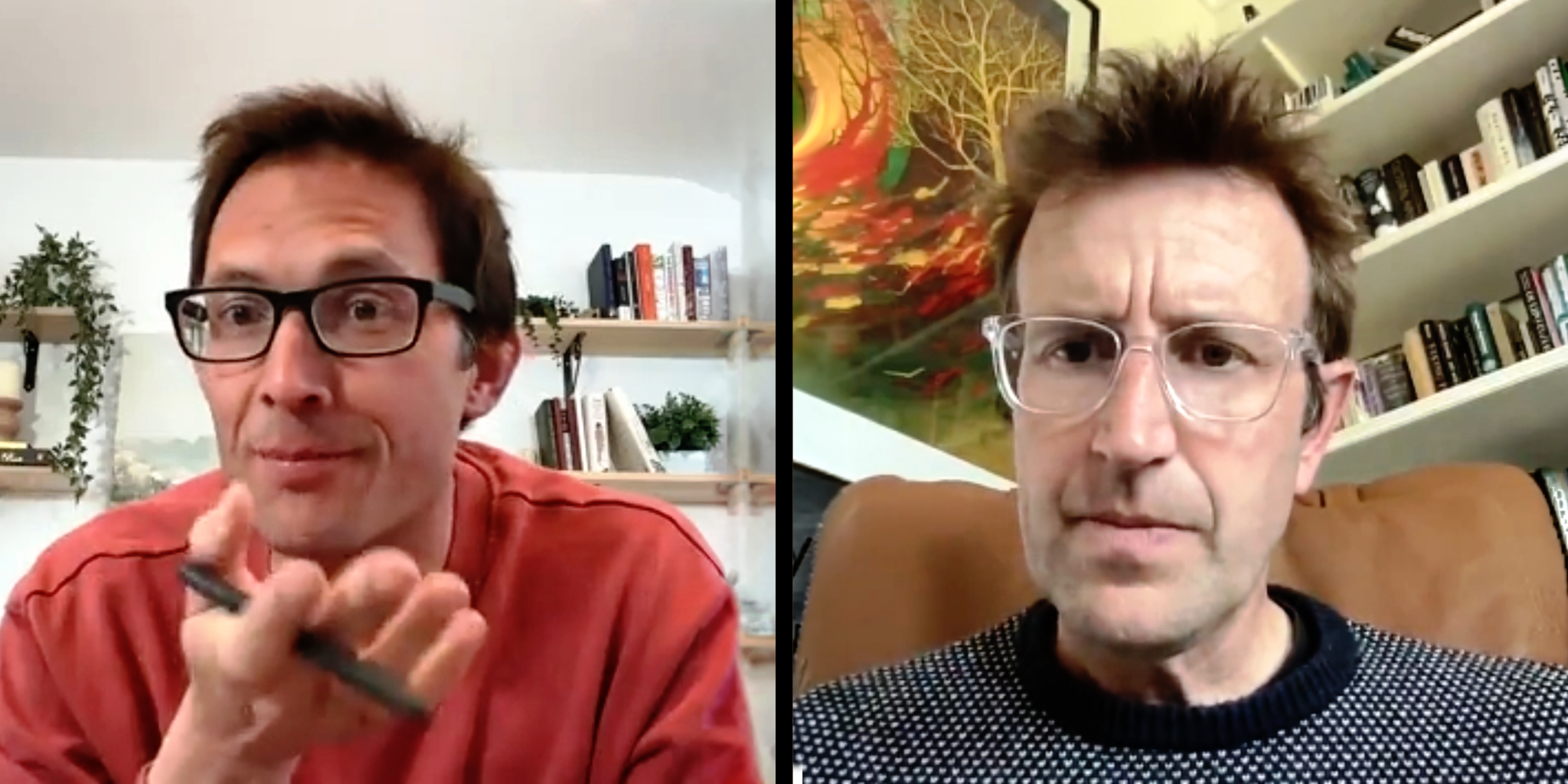
This week, we’re looking at the creeping baseline phenomenon with the bestselling nature writer and friend of Mini Philosophy, Rob Macfarlane.
You can find the companion article here: Zugunruhe: The restless sign that something needs to change
Paid members can see my full interview with Rob at the end.
My clothes always stank.
Growing up, a lot of my friends smoked. This was the early 2000s, and we all knew well enough that smoking was bad for you, but the leather-jacketed rebellion of youth laughs in the face of medical advice.
And so, whenever you went out for a drink, you were met with a tobacco-smog. When you walked into a pub, the room would be so thick with second-hand smoke that you couldn’t see the bar from the door.
I remember how my friend Mark would lean over to the table next to us.
“Can I borrow a lighter, mate?” he’d say. And someone would reach over to light his cigarette. Drag, burn, and blow it into the sky. Mark the Nicotine Dragon.
Then, in 2007, the Blair government introduced the smoking ban. “Nanny state gone crazy,” the tabloids said. No more cigarettes inside. Every half an hour or so, Mark would have to shuffle outside into the cold to find a light. The ban was bad for conversation, but good for the lungs. And at least my clothes didn’t stink.
Nearly 20 years later, my kids are growing up in an almost smokeless world. I honestly can’t remember the last time I saw someone under 30 smoking a real, ember-glowing cigarette. These days it’s bubble gum vapes and smokeless Juuls. No Nicotine Dragons for my kids, just saccharine clouds of apricot. That’s their normal. That’s the world they know.
This week, we look at creeping baseline theory.
Go well,
Jonny
The world we never knew
In this week’s Mini Philosophy interview, I spoke with Rob Macfarlane about his recent work, The Book of Birds. But almost more important than the title itself is the subtitle that comes just below: “A Field Guide to Wonder and Loss.”
“Why don’t you talk about pigeons, Rob?” I asked.
“Well, all the birds I feature are either in or have been in decline. They are on what are called the red or the amber lists of conservation concern. That is not true of the pigeon.”
Read the subtitle, Jonny. Stop asking idiotic questions. That is not true of the pigeon.
Rob’s book is about just how different the world is now. Today, British skies are filled with fewer and less varied birds than ever before. As it happens, I’ve never been much of a birder. I’d be hard-pressed to differentiate a swallow from a swift. But even I appreciate the loss of things.
In his book, Being and Nothingness, Jean-Paul Sartre points out that it takes something to recognize nothing. To feel loss, you must have known presence. To say, “something is missing,” you have to know there was something once there. When I visit my hometown, I know that there used to be a park here. Now, there are new-build homes.
Every generation is blind to certain losses. They don’t know what they don’t have. My kids have grown up in a smokeless world, and that’s a good thing (mostly). But they’ve also grown up in a world with fewer green spaces, fewer trees to climb, and fewer birds to spot. The morning chorus might still be a chirping choir of birds, but it’s a smaller one. There are fewer parts. Harmony flattens into monotony.
A “creeping baseline” is when we grow accustomed to the reality we have and where we normalize the world as it is. “Kids these days” don’t buy newspapers. They don’t look up TV times in a magazine, use a book’s index, or have to nervously wait for a friend at a specified time without any idea if they’re held up or not.
The creeping baseline of nature makes me twice sad. It makes me sad for my children, who are growing up in a world where a cuckoo is rare. The wild parts of the world are shrinking, and the wild parts of growing up are shrinking in step. But it also makes me sad for myself. The creeping baseline is not a new phenomenon. The nature I grew up with would have seemed like a tawdry, manicured thing to my grandparents. They were born into a world busy with bugs, birds, and trees. I was born into a quieter, lonelier world. I need to work far harder to nurture my wilder side.
But we can still work hard. We can learn to see the birds that are still in our skies and to name the trees that still stand. We can journey to the untouched wilds of our country to step back into the world of our forebears. We can learn to feel all that we’ve lost and buck the creeping baseline. And then, maybe, we might even try to push that baseline back the other way.
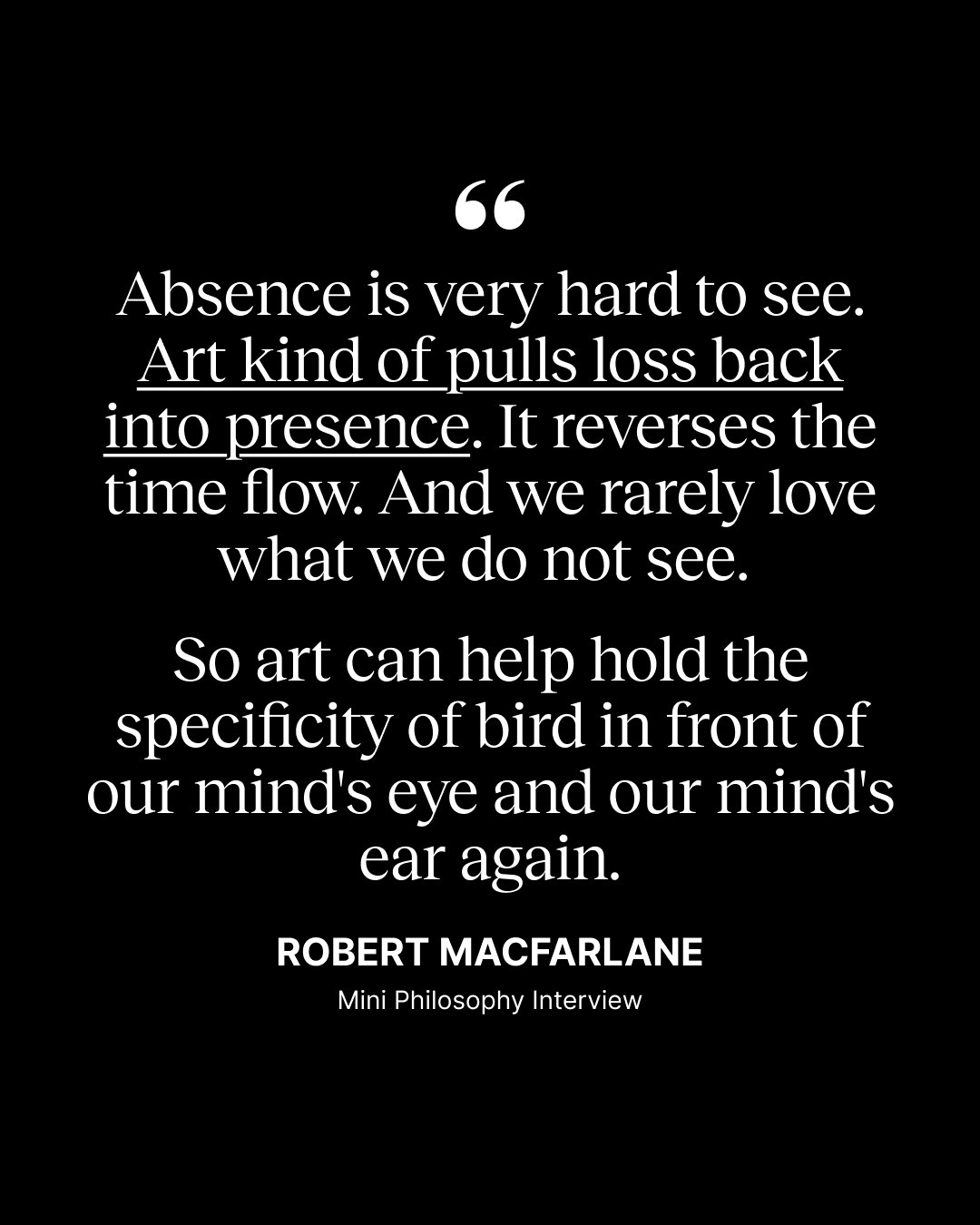
IN A QUOTE
MEMBERS ONLY
Paid members can see my full interview with Rob below: